
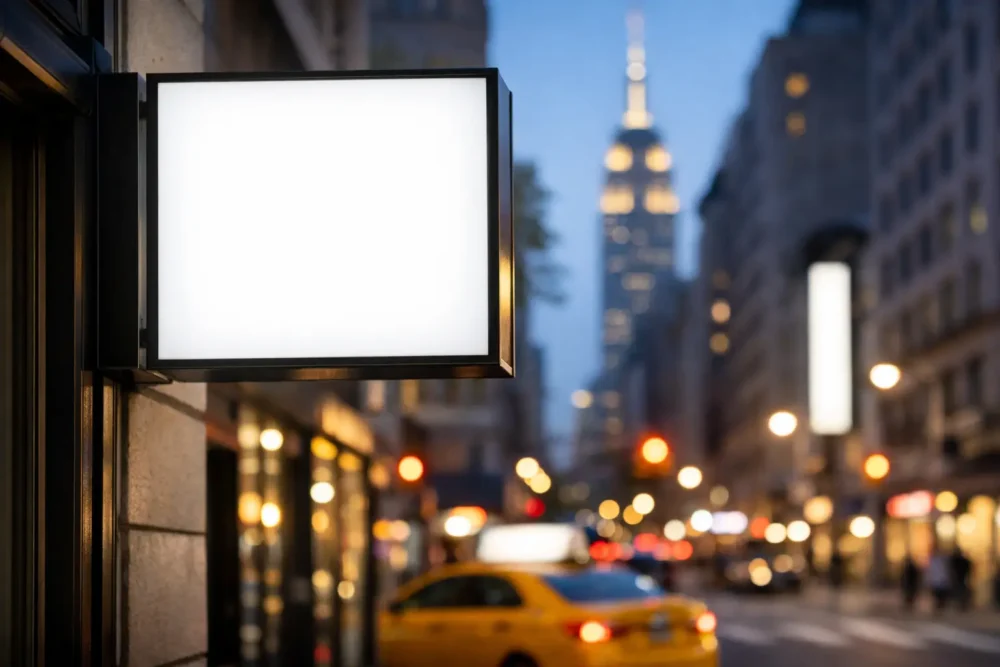
A storefront can be perfectly designed and still disappear after sunset. That is the real test behind any light box signs review: not whether the sign looks good in a product photo, but whether customers can spot, read, and remember your business from the street.
For retail stores, restaurants, medical offices, laundromats, churches, and property managers, a light box sign can deliver high visibility without the higher fabrication cost of individually illuminated channel letters. But there is a major difference between a well-built cabinet sign that supports your brand for years and a dim, generic box that makes the location look dated. The right choice comes down to materials, lighting, graphic design, mounting conditions, and professional installation.
Light Box Signs Review: What Makes a Sign Worth Buying?
A light box sign, also called an illuminated cabinet sign, is a framed enclosure with internal LED lighting and a translucent face. Your logo, lettering, colors, or promotional message is printed or applied to that face. When the lights turn on, the message remains visible day and night.
The appeal is straightforward. One sign can carry a large, colorful message, illuminate a wide area, and work on a storefront, building wall, pylon, interior lobby, or window-facing display. For businesses that need to be found after dark, that visibility is a revenue tool, not just a design preference.
Still, a light box is not automatically the right answer for every location. A premium retail storefront may benefit more from halo-lit channel letters. A temporary promotion may be better served by a banner or window graphic. A directory or healthcare office may need a lower-profile interior light box with clear, accessible information. The best sign format depends on what people need to notice first and how far away they will be when they see it.
Brightness matters, but even lighting matters more
LED illumination has made light boxes more efficient and lower maintenance than older fluorescent cabinet signs. Yet “LED” alone does not tell you much about quality. Cheap modules can create hot spots, where individual light sources show through the sign face, or dark zones around the edges and corners.
A properly engineered light box distributes illumination evenly across the full face. This is especially critical with white backgrounds, pale colors, thin lettering, and large-format graphics. Ask to see the sign illuminated, not only a daytime proof. A face that looks sharp under shop lighting can reveal uneven brightness once it is mounted outside at night.
Brightness must also fit the environment. A sign facing a busy commercial street may need more output than one inside a lobby. Too little light reduces visibility. Too much light can wash out fine details, create glare, and make a refined brand feel harsh. Good fabrication balances output with legibility.
The cabinet and face determine how long it stays presentable
The illuminated face gets attention, but the cabinet does the structural work. Aluminum cabinets are a smart choice for most exterior applications because they resist corrosion and keep weight manageable. The frame, welds, drainage, access points, and mounting hardware all affect the sign’s service life.
For the face, acrylic and polycarbonate are common options. Acrylic usually provides a clean, polished appearance and strong light transmission. Polycarbonate offers greater impact resistance, which can be valuable in exposed or high-traffic settings. The right material depends on the size of the sign, expected weather exposure, and the possibility of impact or vandalism.
Graphics matter just as much. Translucent vinyl, digitally printed films, and dimensional overlays can all be used to create a branded face. The goal is to preserve color accuracy when the sign is both off and illuminated. Some colors shift dramatically when backlit. A bright red may appear pinkish, while dark blue can lose definition if the lighting and film are not selected together.
Where Light Box Signs Perform Best
Light boxes are not limited to one business type. Their strength is flexibility, especially when a location needs a broad visual message instead of separate illuminated letters.
A restaurant can use one to show its name, cuisine, and key visual identity from across the block. A laundromat can combine a recognizable name with hours or service messaging. A medical or dental office can use an illuminated panel for a professional building entrance where nighttime visibility reassures arriving patients. Schools, churches, and community organizations can use changeable or permanent light boxes to make entrances easier to locate.
They also work well inside. An interior light box can give a lobby logo more presence, illuminate a menu or service board, or create a branded focal point behind a reception desk. In these settings, the sign should feel intentional rather than overpowering. Softer illumination and a slimmer cabinet often produce the strongest result.
For New York City storefronts, placement is especially strategic. Pedestrian traffic, double-parked vehicles, neighboring signage, street trees, awnings, and building setbacks can all block a sign that looked large enough on paper. A site review before fabrication prevents expensive surprises. The sign needs to work from the actual approach customers take, not from an idealized front-facing view.
Design Rules That Protect Visibility
The most effective light box designs are usually simpler than business owners expect. Internal lighting supports bold shapes and clear contrast. It does not rescue a crowded layout.
Start with the business name or logo as the dominant element. Then decide whether a descriptor is truly necessary. “Dental Care,” “Fresh Seafood,” or “24-Hour Laundry” can help first-time customers understand the business quickly, but too much supporting copy weakens the main message. Phone numbers, websites, and long lists of services rarely belong on an exterior light box viewed from a moving vehicle or busy sidewalk.
Contrast is non-negotiable. Dark lettering on a pale illuminated background or light lettering on a deep background is generally easy to read. Low-contrast combinations may look stylish up close but fail at distance. Fine script fonts, narrow strokes, and detailed photography also demand caution. What reads on a computer screen can become muddy when illuminated.
If your company operates in a multi-tenant building, make sure the sign design aligns with the property’s rules. Landlords may specify cabinet dimensions, color limitations, mounting methods, or placement zones. A professional sign partner can coordinate design around these requirements before the project reaches fabrication.
Cost: Look Beyond the Initial Quote
Light box sign pricing varies based on size, cabinet depth, face material, graphic complexity, LED configuration, electrical needs, mounting height, and installation conditions. A small interior logo light box and a large exterior cabinet mounted above a storefront are fundamentally different projects.
The lowest quote is often low for a reason. It may exclude electrical work, permits, engineering, installation equipment, removal of an old sign, or service access. It may use thinner materials, lower-grade LEDs, or graphics that fade faster under sun exposure. A vague quote creates risk because the “extra” work tends to surface after the project has already started.
A useful proposal should clearly identify what is being fabricated, how it will be mounted, whether electrical connections are included, and who handles the final installation. It should also account for access. A sign installed high on a masonry facade may require a lift, traffic coordination, landlord approval, and a more involved mounting plan than a ground-level storefront cabinet.
Maintenance is generally manageable with LED light boxes, but it should not be ignored. Ask how the face opens, whether LED modules can be serviced without removing the entire sign, and what happens if a power supply fails. A sign is only valuable while it is visible. Planning for service protects the investment.
Installation Is Part of the Product
A polished cabinet can still underperform if it is mounted crooked, wired incorrectly, or placed where it cannot be seen. Installation determines safety, visual alignment, and long-term reliability.
Exterior mounting must account for wall material, wind exposure, building conditions, electrical routing, and local requirements. The sign should be level, secure, properly sealed, and positioned for visibility without interfering with doors, awnings, sprinklers, or neighboring tenants. For many businesses, this is where a full-service sign company provides the most value: one team can manage design, fabrication, installation, and future support instead of leaving the owner to coordinate separate vendors.
10X Sign Company helps businesses across Queens and the greater NYC metro area evaluate those practical details before a sign is built. That approach reduces rework and keeps the project focused on the outcome that matters – getting your location noticed.
Before approving any light box sign, stand outside your business at the times customers actually arrive. Look from across the street, from the parking area, and from the direction foot traffic approaches. The best sign is not the one with the most features. It is the one that makes the right people find you without hesitation.