
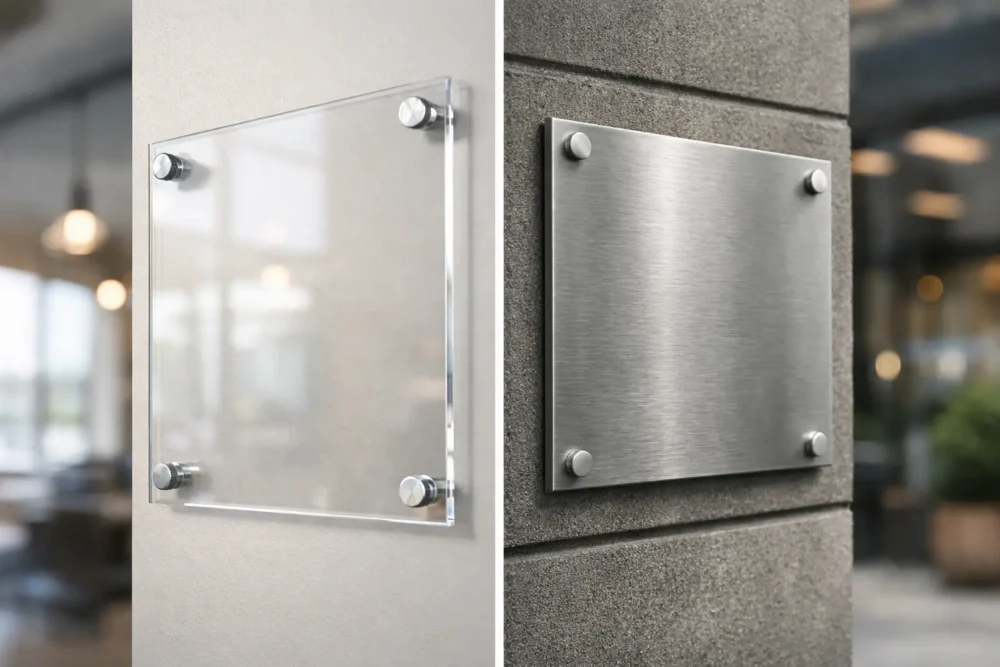
A sign material is not just a production choice. It changes how customers read your business before they walk through the door. A polished acrylic lobby sign can make a medical office feel organized and premium. A fabricated aluminum storefront sign can stand up to years of sun, rain, street traffic, and city grime. When comparing acrylic signs vs metal signs, the right answer depends on where the sign will live, what job it needs to do, and the impression you want it to make.
For business owners, property managers, and organizations, the goal is simple: choose a sign that looks right on day one and continues doing its job long after installation. Here is how to make that call with confidence.
Acrylic Signs vs Metal Signs: The Core Difference
Acrylic is a rigid plastic sheet material with a smooth, glass-like face. It is commonly used for lobby logos, office signs, suite identifiers, wall plaques, directories, donor walls, and dimensional lettering. Acrylic can be clear, frosted, colored, painted, printed, or layered with other materials to create depth.
Metal signs are usually made from aluminum, stainless steel, brass, bronze, or steel, depending on the application. Aluminum is a frequent choice for exterior signage because it is lightweight, resists corrosion, and accepts paint, vinyl graphics, and printed finishes well. Metal can be cut into letters, mounted as panels, engraved, etched, or built into a more substantial architectural sign.
The visual difference is immediate. Acrylic tends to look clean, contemporary, and refined. Metal feels permanent, structural, and established. Neither material automatically wins. A high-end salon, law office, school, restaurant, apartment building, or retail location may need either one – or a combination of both.
Choose Acrylic When Interior Presentation Leads
Acrylic earns its place where customers can see it up close. It has a crisp surface and can be fabricated with polished edges, standoffs, layered panels, and dimensional logo elements. That makes it especially effective in reception areas, hallways, conference rooms, and other branded interiors.
A clear acrylic panel with second-surface printing can give a lobby logo a floating appearance. Frosted acrylic can add privacy to office doors or glass partitions while still looking polished. Colored acrylic letters can match brand colors more accurately than a generic off-the-shelf sign. For organizations that want their space to feel intentional without making it feel overly industrial, acrylic is often the stronger fit.
Acrylic is also useful when your design needs fine detail. Small text, logos, and directional elements can be printed cleanly, provided the sign is designed for the viewing distance. For a doctor’s office, dentist office, college department, church office, or professional services firm, acrylic interior signs can create consistency from the front desk to each room and hallway.
That said, acrylic is not indestructible. It can scratch, crack from hard impact, or show wear if installed in a high-contact location without the right thickness and mounting method. Clear acrylic also reveals dust, fingerprints, and wall imperfections more easily than some other finishes. A sign partner should recommend the proper gauge, finish, and placement before fabrication begins.
Where acrylic performs best
Acrylic is a smart choice for lobby signs, interior wayfinding, office door signs, branded wall displays, reception logos, menu boards, and decorative plaques. It can also work outdoors in protected locations, but long-term exterior exposure requires careful material selection, quality printing, and a realistic maintenance plan.
If the sign is a close-range brand moment, acrylic gives you flexibility without sacrificing a professional look.
Choose Metal When Durability and Presence Matter
Metal is built for signs that need to communicate strength. It is a natural fit for storefronts, building exteriors, parking and property signs, industrial facilities, construction-related applications, monument signs, and permanent directional signage.
For exterior projects, aluminum is often the practical workhorse. It will not rust like untreated steel, it can handle changing weather, and it gives fabricators a dependable base for painted graphics, vinyl lettering, digital prints, and reflective finishes. A properly fabricated aluminum panel can serve a retail business or commercial property for years while keeping its shape and legibility.
Metal also gives larger signs more authority. A brushed stainless-steel plaque at a building entrance, aluminum dimensional letters above a storefront, or a metal tenant directory in a property lobby sends a different message than a lightweight temporary display. It tells customers, tenants, and visitors that the location is established and cared for.
In the New York City metro area, exterior signs face a demanding environment. Wind, moisture, UV exposure, road salt, temperature swings, and daily street activity all affect material performance. Metal is often the safer long-term choice for exposed applications, especially when paired with the correct finishes, hardware, and professional installation.
Not all metal signs are the same
The word metal covers a lot of ground. Aluminum is efficient and versatile. Stainless steel provides a clean, upscale finish but usually comes at a higher cost. Brass and bronze can create a traditional or institutional look, though they require more consideration for finish changes over time. Steel offers strength but must be protected properly against corrosion.
The material should follow the environment and design. Choosing metal solely because it sounds more durable can lead to unnecessary cost. Choosing the least expensive metal option for a high-exposure site can lead to premature wear. The right specification matters as much as the category.
Compare Cost, Maintenance, and Installation
Acrylic can be more cost-effective for many interior projects, especially flat panels, door signs, and printed graphics. Costs rise when you add multiple layers, custom shapes, thick material, specialty finishes, or detailed dimensional elements. Even then, acrylic often delivers a high-end look without the price of fabricated metal.
Metal usually carries a higher starting cost because of material, fabrication, finishing, and mounting requirements. For an exterior sign, that investment can be justified by its service life and ability to handle rougher conditions. Larger metal signs may also require more involved installation, including structural mounting, permits, site access planning, or coordination with property management.
Maintenance is another factor business owners often overlook. Acrylic benefits from gentle cleaning with non-abrasive materials. Harsh cleaners can haze or scratch the face. Metal signs are generally easier to maintain outdoors, but painted finishes, exposed edges, and mounting hardware should still be inspected periodically. A clean sign is part of your customer experience, not an afterthought.
The Best Option May Be Both
Many of the strongest sign systems combine acrylic and metal rather than forcing a one-material decision. For example, a business may use durable aluminum letters on its exterior storefront, then install a layered acrylic logo behind the reception desk. A property manager may choose metal for outdoor wayfinding and acrylic for interior suite signs.
This approach keeps each material in the role it handles best. Metal takes the weather and delivers long-term exterior presence. Acrylic brings color, detail, and polish to customer-facing interiors. The result is a more consistent brand experience across the entire property.
Start With the Sign’s Job, Not the Material
Before choosing acrylic or metal, answer a few practical questions. Will the sign be indoors or fully exposed outdoors? Is it meant to be temporary, long-term, or permanent? How far away will people read it? Does it need to match an existing storefront, building finish, or interior design? Will the sign be touched often, cleaned frequently, or installed in a busy public area?
Those answers narrow the field quickly. A restaurant opening on a busy commercial corridor may prioritize durable exterior metal signage and high-visibility graphics. A new professional office may prioritize acrylic lobby branding, door signs, and privacy film. A multi-tenant building may need both, with metal handling exterior identification and acrylic organizing the visitor experience inside.
A strong sign project is not about picking the trendiest material. It is about putting the right material in the right place, with the right fabrication and installation behind it. 10X Sign Company helps businesses turn that decision into signage that looks sharp, performs reliably, and gives customers a reason to notice your space.