
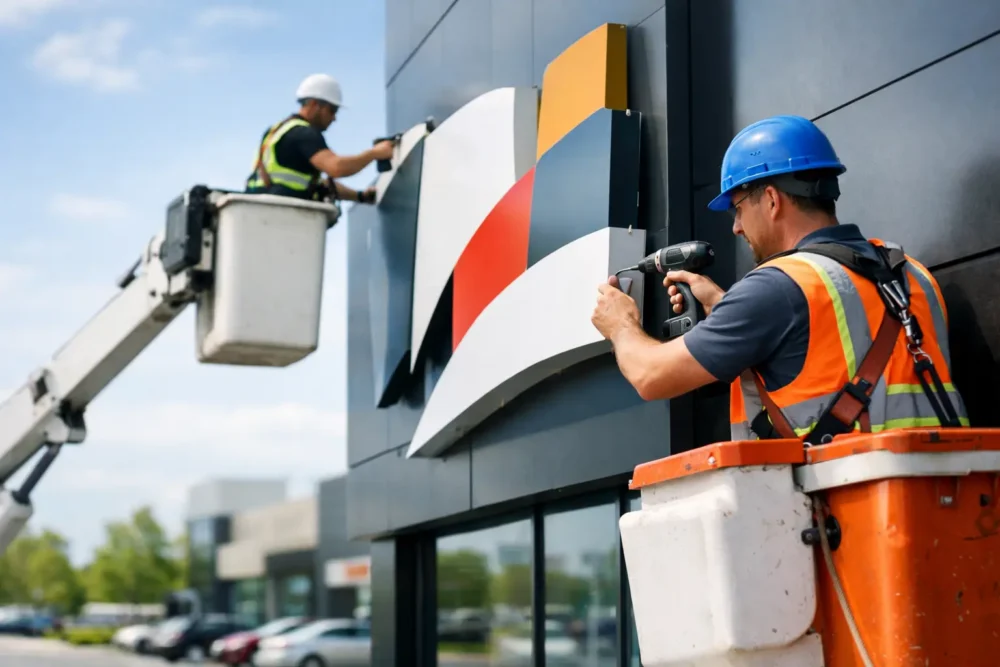
A sign can look exceptional in the shop and still fail where it matters most: on your building, in your lobby, or above your storefront. Professional sign installation services turn a finished sign into a visible business asset. The right placement, mounting method, electrical connection, and final alignment determine whether customers notice your brand or pass right by it.
For business owners, property managers, and organizations across the New York City metro area, installation is not the last minor detail of a sign project. It is the moment the entire investment becomes public. A crooked channel letter, loose banner, dim light box, or poorly positioned window graphic sends the wrong message fast. A clean, secure installation tells customers that your business is established, ready, and serious about the experience it delivers.
Why Professional Sign Installation Services Matter
Your sign has one job: make an impression before a customer walks through the door. Installation affects visibility, safety, durability, and brand presentation all at once. That is why a one-size-fits-all approach does not work.
A storefront sign may need to be mounted to brick, masonry, metal, glass, EIFS, or an existing sign band. Each surface calls for different hardware and techniques. Installing a heavy illuminated sign also requires careful consideration of support points, wiring access, weather exposure, and how the sign will be serviced later. What looks simple from street level can involve significant planning behind the wall or above the awning.
The same is true inside a property. A lobby sign must sit at the right height and align with architectural elements. ADA signage needs to be placed where people can find and use it. Wayfinding signs must guide visitors without creating visual clutter. Precision is what makes these pieces feel intentional.
Start With the Site, Not Just the Sign
The best installation plan begins with a site review. Before fabrication is finalized, the installer should understand the actual conditions of the location. Photos help, but they do not always reveal wall construction, clearance issues, electrical availability, landlord requirements, or obstacles such as pipes, sprinkler lines, and façade details.
A proper site evaluation answers practical questions early. Can the sign be seen from the direction customers approach? Is the proposed mounting area structurally appropriate? Will a lift, ladder, or sidewalk access be needed? Does the installation require building approval or coordination with property management? These details can affect the schedule and cost, but finding them early prevents expensive changes after the sign is produced.
For a restaurant in Queens, visibility may mean positioning an illuminated sign to stand out in evening foot traffic. For a medical office in Manhattan, it may mean using a polished lobby sign and clear suite identification that patients can locate without confusion. For a Long Island retail center, it may mean following a property-wide sign criteria package. The right answer depends on the site and the goal.
Match the Installation Method to the Sign Type
Different sign formats have different demands. Treating them all the same can create avoidable problems.
Channel letters need accurate layout, secure stud mounting, and professional electrical work when illuminated. Their spacing must be consistent, especially when letters are installed across a long storefront. Even a small alignment issue becomes obvious when the sign is lit at night.
Monument signs require stable foundations and a clear plan for visibility from the roadway. Their location should account for traffic flow, landscaping, setbacks, and future maintenance. A monument sign that is blocked by parked cars or shrub growth will not produce the results it should.
Banners and temporary event signs need strong attachment points that can handle wind and weather without damaging the building or the banner itself. Window graphics need meticulous surface preparation and application to avoid bubbles, wrinkles, and poor edge adhesion. Interior dimensional letters, acrylic panels, directories, and wall graphics call for straight lines, balanced spacing, and careful protection of finished surfaces.
Illuminated signs add another layer of responsibility. Electrical components must be handled correctly, tested before the crew leaves, and installed in a way that supports future service. The goal is not simply to get the lights on. It is to make sure the sign performs reliably after opening day.
What a Strong Installation Process Looks Like
Reliable installation is organized well before the crew arrives. The strongest sign partners coordinate design, fabrication, logistics, and on-site execution so nothing gets lost between teams.
A typical professional process includes four essential stages:
- Site review and measurement to confirm conditions, access, and mounting requirements.
- Fabrication planning that accounts for the final installation method, not just the design rendering.
- Scheduled installation with the appropriate equipment, crew, hardware, and safety procedures.
- Final inspection to check alignment, attachment, illumination, finish quality, and cleanup.
That last step matters. A project is not complete just because the sign is on the wall. Protective film, packaging, drilling debris, old hardware, and removed signage should be handled professionally. Your team should be able to open for business with a finished appearance, not a cleanup project.
Avoid the Cost of a Bad Install
Trying to save money on installation can become expensive when the wrong hardware damages a façade, electrical connections fail, or a sign has to be removed and redone. It can also create liability concerns if a sign is not mounted securely.
Poor installation can shorten the life of a quality sign. Water infiltration around penetrations, unsupported weight, loose fasteners, and improperly sealed openings may not be obvious on day one. Over time, however, those issues can lead to stains, corrosion, electrical trouble, or damage to the building exterior.
There is also the business cost. If your storefront is closed while an installation issue is fixed, or if your new location opens without its primary signage, you lose valuable visibility when customers are first trying to find you. For franchises, multi-location operators, schools, and medical offices, inconsistent installation also weakens brand standards across properties.
Choose One Partner From Design Through Installation
When design, production, and installation are managed by separate vendors, responsibility can get blurry. The fabricator may say the artwork was approved. The installer may say the sign was built in a way that made mounting difficult. The property manager may be waiting for answers from both. That is not how a time-sensitive business project should run.
A full-service sign partner owns the process from the first conversation through final placement. That means the design can account for fabrication realities, fabrication can account for the site, and the installation team arrives prepared for the specific job. It also gives you one point of contact when timing changes, landlord questions arise, or you need additional signs added to the project.
10X Sign Company helps businesses bring that process under one roof, from custom sign concepts and fabrication to professional installation, removal, and disposal. For an owner juggling staff, inventory, opening deadlines, and daily operations, that coordination is more than convenient. It keeps the project moving.
Plan Installation Around Your Business Operations
A good installer does more than mount the sign correctly. They respect the realities of your operation. Retail storefronts may need work completed before opening, after closing, or during lower-traffic hours. Restaurants may need to avoid delivery windows and peak service. Office buildings may require coordination with building management, loading docks, elevators, or tenant access rules.
Be clear about your deadline, access limitations, and opening date from the start. If permits, approvals, or specialized equipment are involved, build in extra time. Fast service is valuable, but speed should never mean skipping a site review or forcing an unsafe installation.
The right sign is designed to be noticed. The right installation makes sure it stays that way. Start with a clear site plan, choose a team that understands the material and the property, and make every customer’s first look at your business count.