
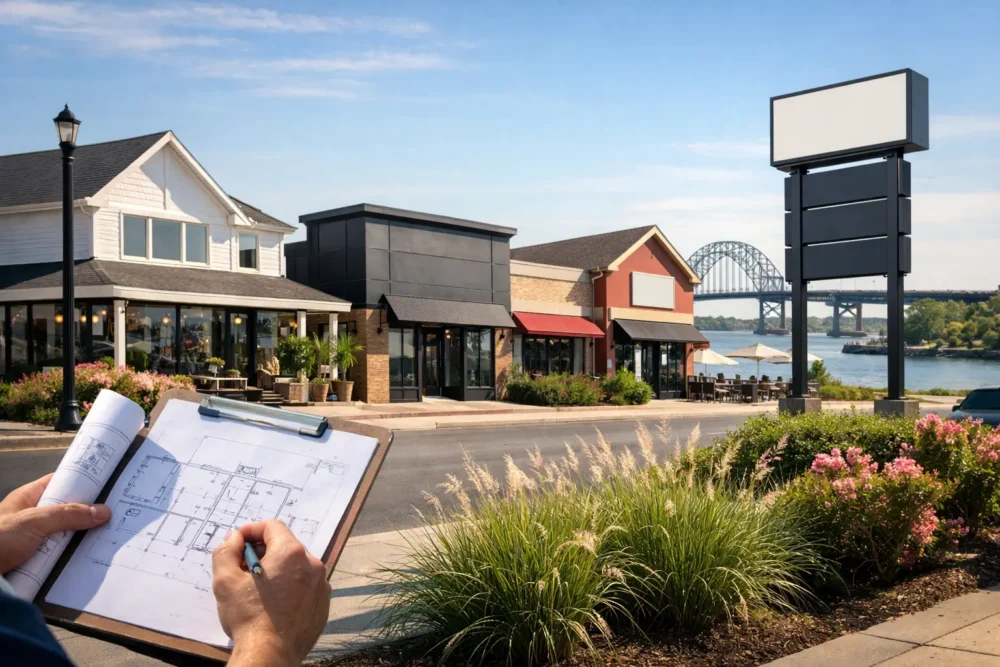
A storefront sign can be beautifully designed, professionally fabricated, and ready to install – then stopped by a local rule about square footage, illumination, mounting location, or permits. Long Island sign codes are not one universal set of rules. They vary by town, village, city, zoning district, building type, and sign format. For business owners, that means compliance needs to be part of the project from day one, not a last-minute hurdle before installation.
A strong sign should do two jobs at once: make your business impossible to miss and meet the requirements of the property and municipality. The right planning protects your opening date, your budget, and the impact of your brand.
Why Long Island Sign Codes Vary So Much
Long Island includes many separate local jurisdictions, each with its own zoning code, permit process, and enforcement practices. A sign that is permitted in one commercial corridor may require a different size, design, or mounting method just a few miles away.
Local rules often distinguish between a building-mounted sign, freestanding monument sign, pylon sign, window graphic, awning sign, temporary banner, and illuminated channel letters. They may also treat a shopping center tenant differently from a standalone business. If your property has a landlord-approved sign criteria package, you need to satisfy that standard along with municipal requirements.
Historic districts, mixed-use areas, residential-adjacent properties, and downtown business districts can add another layer of review. In these locations, officials may pay closer attention to colors, sign height, illumination, materials, and whether the sign fits the character of the street.
The practical takeaway is simple: do not assume your neighbor’s sign establishes what you can install. It may have been grandfathered, approved under older rules, or permitted under conditions that do not apply to your business.
The Sign Code Details That Affect Your Project
Most sign regulations focus on visibility, safety, and the overall appearance of commercial areas. That does not mean every code is anti-signage. It means your design has to work within measurable limits.
Sign area and dimensions
Many municipalities limit the allowable sign area based on storefront width, building frontage, lot size, or zoning district. The measurement may include the full sign cabinet, the background panel behind dimensional letters, or the letters themselves, depending on the local code.
This distinction matters. A clean set of channel letters can sometimes create a larger visual presence without using a large background cabinet. On the other hand, a panel sign may be more appropriate when your brand depends on logos, multiple services, or detailed information. The best format depends on both the code and how customers find you.
Height, projection, and placement
Codes can regulate how high a sign sits on the facade, how far it projects from the building, and how close it can be to property lines, sidewalks, driveways, or intersections. These rules are especially relevant for blade signs, projecting signs, monument signs, and pylon signs.
A sign that extends over a sidewalk may require specific clearance from the ground. A freestanding sign can be limited by height, setback, and sightline requirements so it does not block drivers leaving the property. A professional site review catches these issues before fabrication begins.
Lighting and digital displays
Illuminated signs are often allowed in commercial districts, but the type of illumination can be regulated. Internally illuminated cabinet signs, halo-lit channel letters, LED message centers, exposed neon-style lighting, and digital displays may each be treated differently.
Some jurisdictions restrict brightness, operating hours, animation, flashing effects, or changing copy. Others may prohibit electronic message boards in certain zones while allowing static illuminated signage. If your business operates at night, lighting is not an afterthought. It is part of your visibility strategy and must be planned accordingly.
Window graphics and temporary signs
Window graphics look simple, but they can trigger rules about how much glass may be covered. Excessive coverage can reduce visibility into the store, create safety concerns, or violate local limits on window signage.
Temporary banners, grand opening signs, promotional decals, feather flags, and sidewalk signs can also require permits or have time limits. These formats are excellent for a launch, sale, event, or seasonal campaign, but only when used within the local rules. A temporary sign that stays up too long can become a compliance issue.
Permits Are More Than Paperwork
For many exterior sign projects, permits are required before installation. Depending on the project, the municipality may ask for a sign application, scaled drawings, a site plan, photos of the storefront, landlord authorization, electrical details, and proof of insurance. Structural details may be needed for heavier signs, freestanding structures, or signs attached to masonry.
The permit timeline depends on the jurisdiction and the complexity of the application. A straightforward storefront sign may move quickly when the paperwork is complete. A variance request, landmark review, freestanding sign, or electrical upgrade can take longer. If you are planning a new opening, restaurant renovation, medical office buildout, or franchise conversion, signage should be scheduled early alongside construction and occupancy planning.
Do not fabricate first and ask questions later. If a sign must be resized or redesigned after production, the cost is not just materials. It can also mean lost visibility during a critical opening period.
When a Variance May Be Necessary
Sometimes the sign that best serves the business does not fit the code as written. Perhaps your storefront sits far back from the road, nearby trees block visibility, or the building layout makes a standard placement ineffective. In these cases, a variance or special approval may be possible, but it is never guaranteed.
A variance process typically requires a clear case for why the requested sign is reasonable and why strict compliance creates a practical challenge. Municipal boards may consider neighborhood impact, traffic safety, lighting, and whether the request changes the character of the area.
This is where trade-offs matter. A larger sign may sound like the obvious answer, but better letter contrast, smarter placement, halo lighting, directional wayfinding, or a coordinated monument sign can sometimes solve the visibility problem without a lengthy approval process.
A Smarter Way to Plan a Compliant Sign
The most efficient projects start with a real conversation about the site, not a guess based on a logo file. Before finalizing a sign, confirm the property address, zoning context, storefront dimensions, existing conditions, landlord requirements, and the primary viewing distance. A sign seen from a parking lot needs a different approach than one seen by pedestrians on a busy sidewalk.
Then match the sign type to the job it needs to do. Channel letters can deliver a premium, high-visibility facade presence. Monument signs help customers identify a property from the road. Window graphics create fast promotional impact. Interior lobby signs, ADA signs, directories, and wayfinding carry the brand experience beyond the entrance.
A full-service sign partner can coordinate the design, fabrication, permit documentation, installation details, and final placement as one connected project. That reduces the common problem of having a great design that cannot be installed as intended.
Common Mistakes That Create Delays
The most expensive signage mistakes are usually preventable. Business owners often rely on online examples without accounting for local restrictions, order a sign before obtaining landlord approval, underestimate electrical requirements, or choose lettering that is too small to read from the actual viewing distance.
Another common issue is treating a sign as a single isolated object. Your exterior sign may need to work with parking signs, window graphics, directional signs, suite identification, lobby branding, and ADA requirements. When these elements are planned together, the result looks more professional and helps customers move through the property with less confusion.
For franchises and multi-location businesses, brand consistency adds pressure. Your approved brand package may need thoughtful adaptation to fit local size limits or building conditions. A capable sign team protects the brand while finding a compliant solution that still performs.
Build Visibility Without Guesswork
Sign codes should not force your business into forgettable signage. They should shape a smarter plan – one that uses the right format, placement, scale, and lighting for your location. 10X Sign Company helps businesses turn that plan into finished signage, from early concepts and fabrication through professional installation.
Before you commit to a design, get the site reviewed, confirm the local requirements, and build the project around what will actually be approved and seen. That is how your sign starts working for your business from the moment it goes up.