
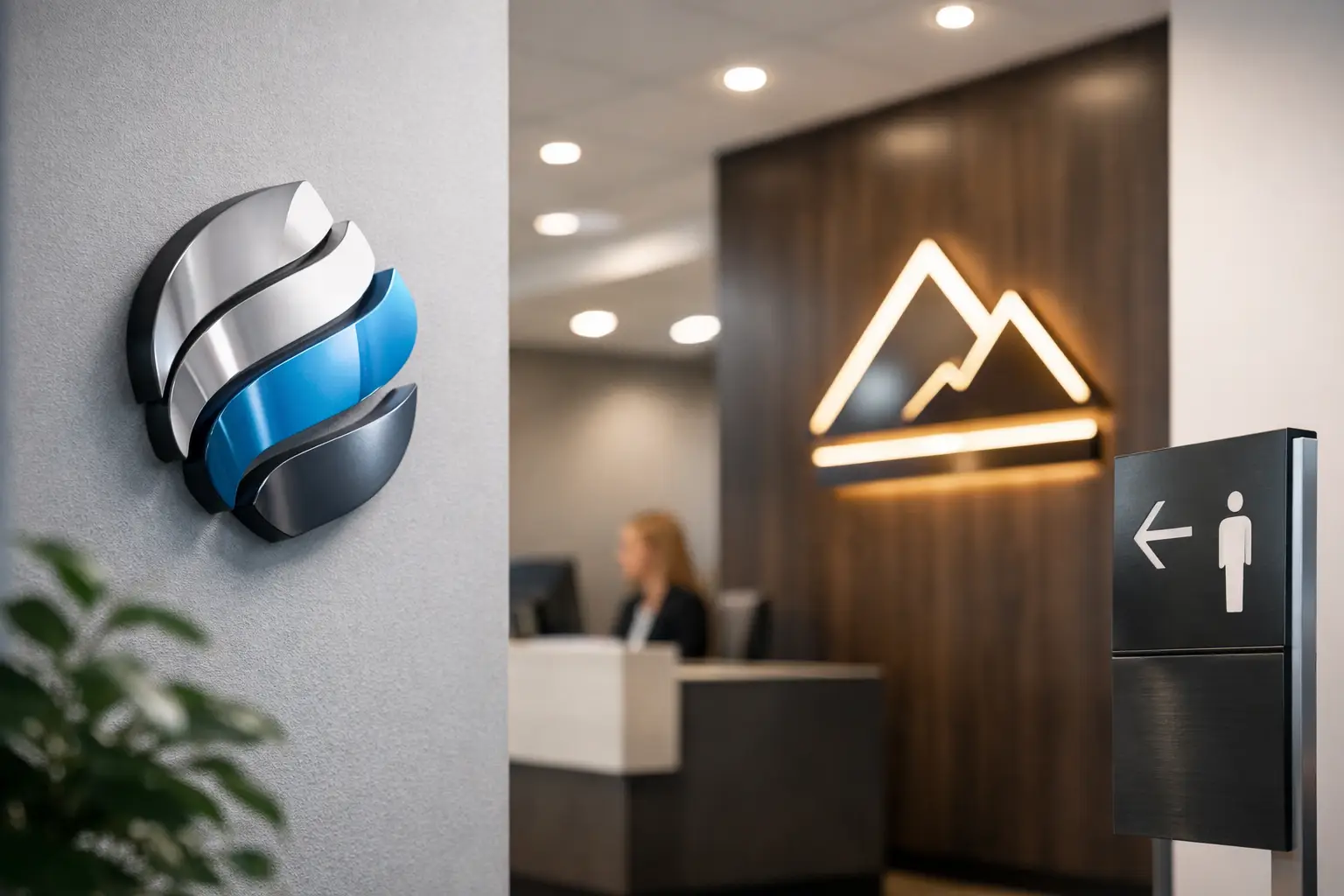
A blank lobby, a confusing hallway, or a wall with no brand presence costs more than most business owners realize. Custom indoor signs for business are not decoration. They set the tone, direct traffic, answer questions before your staff has to, and make your space feel established the minute someone walks in.
In New York City, that matters fast. People decide what they think about your business in seconds. If your interior feels polished, clear, and intentional, you earn confidence early. If it feels pieced together, outdated, or hard to navigate, customers notice that too.
Why custom indoor signs for business matter
Indoor signage does three jobs at once. First, it supports your brand. Second, it improves the customer experience. Third, it helps your team operate more efficiently.
That combination is why custom interior signs perform so well across retail stores, medical offices, schools, churches, property management buildings, restaurants, and franchise locations. A lobby sign can make a company feel credible. Directional signs can reduce confusion and keep people moving. Branded wall graphics can turn ordinary square footage into a stronger sales environment.
The biggest mistake is treating interior signs like an afterthought. Many businesses spend heavily on storefront visibility, then leave the inside underdeveloped. But once a customer walks through the door, the interior is where trust gets reinforced. That is where your brand either keeps its promise or loses momentum.
The best indoor signs are built around function first
A good-looking sign that does not solve a real problem is just wall filler. The strongest custom indoor signs for business start with a clear purpose.
In a medical office, that purpose may be reducing stress by guiding patients from reception to exam rooms. In a retail setting, it may be highlighting promotions, organizing departments, or leading shoppers toward checkout. In an office building, it may be helping visitors find suites, restrooms, elevators, or meeting rooms without asking the front desk for help.
This is where custom work beats generic signage. Every business has different traffic patterns, walls, lighting conditions, branding standards, and compliance needs. A sign system that works in a Manhattan dental practice may not fit a Queens laundromat or a Brooklyn school. Material, size, placement, and message all depend on the space.
That is also why a turnkey sign partner saves time. When one team can handle design, fabrication, and installation, you avoid the usual disconnect between what looks good in concept and what actually works in the field.
Types of indoor signs that create real impact
The right mix depends on your space, but most businesses benefit from a combination of brand-focused and utility-focused signage.
Lobby signs and reception branding
This is usually the signature piece. Acrylic logo signs, dimensional letters, metal finishes, illuminated displays, and polished wall branding give your front area authority. For offices, clinics, schools, and churches, the lobby sign often becomes the visual anchor of the whole interior.
If your goal is to impress clients, investors, tenants, or guests, this is the place to invest. The trade-off is that high-end finishes cost more, but they also create the strongest first impression and hold up better over time.
Wayfinding and directory signs
These signs reduce friction. They help people move through your building without confusion, which matters even more in busy spaces with multiple rooms, departments, or tenants.
Property managers, schools, medical facilities, and office buildings rely on directories, room identifiers, directional arrows, and floor signs for a reason. They keep the environment organized. They also reduce the number of interruptions your team deals with during the day.
ADA signs
ADA signage is not optional in many commercial environments. It helps your space stay compliant while making navigation more accessible for everyone.
The key here is accuracy. Placement, tactile elements, braille, and contrast all matter. This is not the category to guess on. A professionally produced ADA sign program protects your business and makes your facility easier to use.
Wall graphics and environmental branding
If you want your interior to feel more dynamic, wall graphics do a lot of work quickly. They can reinforce your mission, add energy to a retail space, showcase products, tell your story, or turn empty walls into branded assets.
They are especially effective in fitness studios, schools, restaurants, franchise locations, and creative offices. Compared with dimensional signage, wall graphics can be more cost-effective for covering larger areas, though they may not deliver the same premium feel in high-end reception spaces.
Department, room, and suite signs
These are practical, but they still affect perception. Clean, consistent room signs show that your business is organized and established.
In offices, clinics, colleges, and multi-tenant buildings, these signs support day-to-day functionality. They may not be the most exciting part of a project, but when they are inconsistent, people notice.
Materials matter more than most buyers expect
A sign can have a great design and still underperform if the material is wrong for the environment.
Acrylic is popular because it looks modern, clean, and versatile. Brushed metal or aluminum can create a more corporate or upscale appearance. PVC and foam board are budget-friendly options for certain applications, though they are not ideal for every permanent installation. Vinyl works well for wall graphics and windows, especially when you want bold visual coverage without major construction.
Lighting also changes everything. A glossy finish may look sharp in one lobby and produce glare in another. A dark sign may disappear on a low-light hallway wall. In a busy New York interior, durability matters too. Signs in high-traffic areas need to resist wear, cleaning, and daily contact.
This is where experience pays off. Choosing based only on appearance often leads to rework. Choosing based on use, location, and maintenance gives you a better long-term result.
What business owners should think about before ordering
Before production starts, there are a few decisions that shape the outcome.
Start with the goal. Are you trying to impress visitors, guide traffic, improve compliance, support sales, or do all of the above? The answer affects the whole sign plan.
Then look at the actual environment. Measure sightlines, wall space, lighting, and traffic flow. A sign that is too small, too high, or placed in the wrong corridor will not do its job no matter how well it is made.
Brand consistency matters too. Fonts, colors, finishes, and tone should align with the rest of your business. If your storefront, printed materials, and interior all look unrelated, the brand feels weaker.
Budget should be part of the conversation early, but not in a way that cuts strategy. Sometimes it makes sense to phase the project. You might prioritize a lobby sign, directories, and ADA signs now, then add wall graphics and room signage later. That approach keeps the project moving without compromising the most critical pieces.
Why installation is part of the product
A well-made sign can still fail if it is installed poorly. Crooked letters, weak mounting, bad spacing, and rushed placement ruin the final result.
Professional installation is what makes custom indoor signs look intentional. It also keeps projects on schedule, especially for businesses trying to open, renovate, rebrand, or update a tenant space without disrupting operations. In active commercial environments, installation timing matters just as much as fabrication quality.
That full-service approach is one reason businesses across Queens, Brooklyn, Manhattan, the Bronx, and Long Island prefer working with one accountable team. With 10X Sign Company, clients can move from concept to fabrication to installation without juggling multiple vendors or chasing answers from different shops.
The businesses that gain the most from custom indoor signage
Almost any commercial space benefits from stronger interior branding and navigation, but some see immediate returns.
Retail stores gain more structure and better promotional visibility. Medical and dental offices create a calmer patient experience. Schools and colleges improve navigation for students, staff, and visitors. Property managers make buildings easier to use and more professional for tenants. Restaurants build atmosphere while guiding ordering and pickup flow. Churches and community organizations create more welcoming, organized interiors.
If your space gets foot traffic, hosts appointments, serves the public, or depends on presentation, interior signage is not extra. It is part of how the business performs.
The best results come when signs are planned with purpose, built for the space, and installed the right way. When that happens, your interior works harder every day without asking your staff to do more. And that is the kind of upgrade customers notice before you ever say a word.