
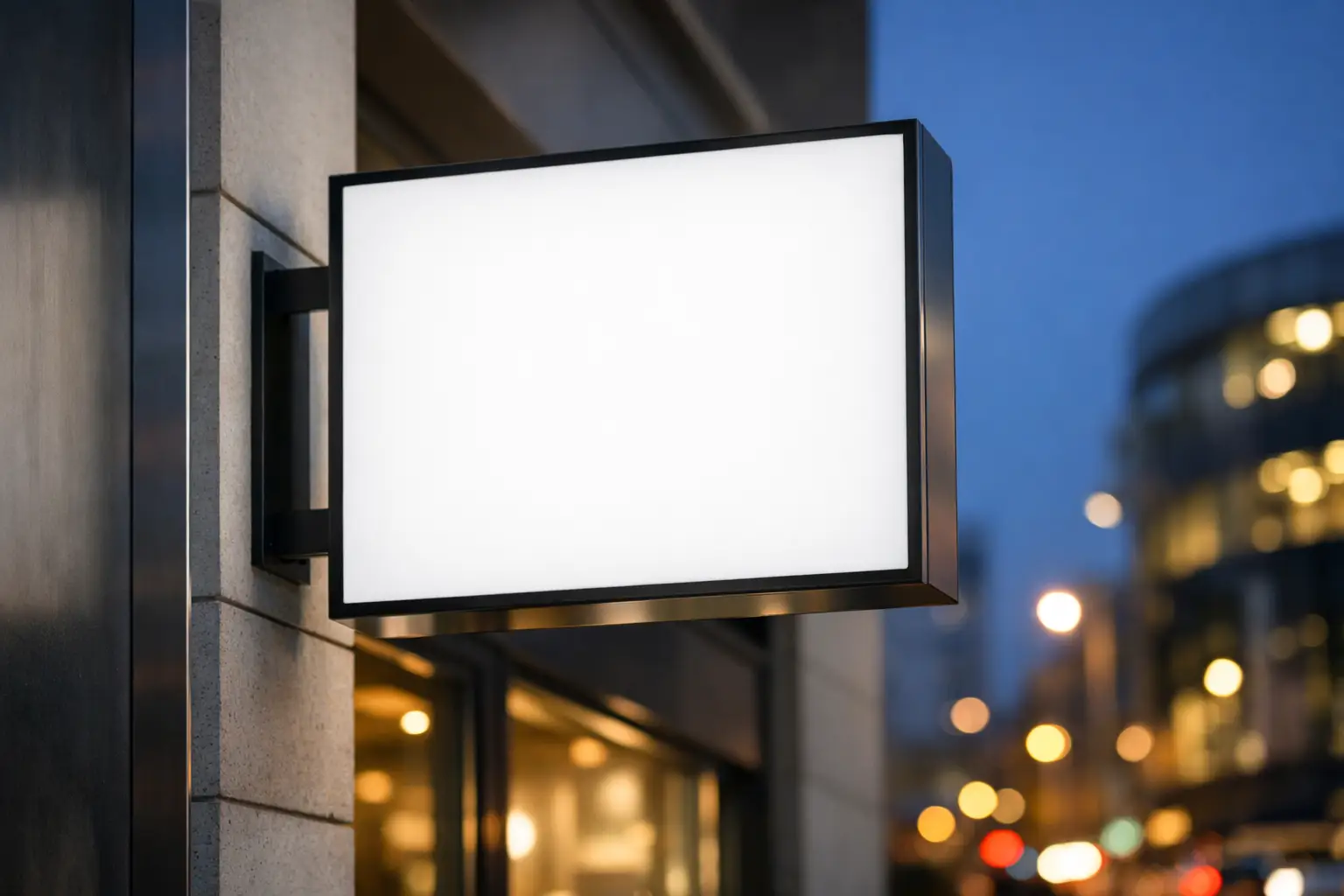
A storefront can have the right location, great products, and steady foot traffic – and still get ignored after dark. That is usually when business owners start asking, what is a light box sign, and is it the right move for their space?
A light box sign is an illuminated sign cabinet with internal lighting and a graphic face that displays your business name, logo, message, or promotion. In simple terms, it is built to make your brand visible day and night. You will often see light box signs mounted on storefronts, above entrances, in shopping centers, inside lobbies, at events, and along building exteriors where clear visibility matters.
For many businesses, the appeal is straightforward. A light box sign gives you consistent presence, stronger readability, and a polished look without needing something overly complicated. But like any signage choice, the right fit depends on your goals, your location, your brand style, and sometimes your landlord or local sign rules.
What Is a Light Box Sign and How Does It Work?
A light box sign is typically made from a metal or aluminum frame, an acrylic or polycarbonate face, and internal LED lighting. The face can be printed, layered with vinyl graphics, or designed with cut elements depending on the final look you want. When the internal lights turn on, the message on the face becomes visible and easy to read from a distance.
Most modern light box signs use LED illumination because it is energy efficient, long-lasting, and bright. Older versions sometimes used fluorescent tubes, but LEDs have become the standard for good reason. They provide cleaner light, lower maintenance demands, and more flexibility in cabinet depth and design.
The sign can be single-sided or double-sided. A single-sided cabinet is usually mounted flat against a wall or storefront facade. A double-sided version is often used as a projecting sign, so people coming from either direction can see it. That can be especially useful on busy commercial streets where drivers and pedestrians approach from multiple angles.
Why Businesses Choose Light Box Signs
The biggest reason is visibility. If people cannot find you quickly, your sign is not doing enough. A light box sign solves that problem by keeping your name and branding visible in low light, bad weather, and evening business hours.
This matters for more than restaurants and retail stores. Medical offices, laundromats, churches, schools, salons, franchises, and property-managed buildings all benefit from signage that stays readable throughout the day. In dense commercial areas, where neighboring businesses are competing for attention, lighting is often the difference between blending in and standing out.
There is also a practical branding advantage. A well-made light box sign creates a stronger first impression than a temporary banner or a non-illuminated panel with weak contrast. It signals that the business is established, professional, and open for business.
That said, brighter is not always better. A sign still needs the right proportions, the right font sizing, and the right contrast. If the design is crowded, lighting will not fix it. Good fabrication and smart layout matter just as much as illumination.
Common Types of Light Box Signs
Not every light box sign looks the same, and that is where many buyers get tripped up. They know they want something illuminated, but they are not sure which format matches their space.
Wall-mounted light boxes are the most common. These are installed directly onto a building facade and work well for storefronts, plazas, and office entrances. They are often rectangular, but custom shapes are possible.
Projecting light box signs extend outward from the wall and are ideal where side visibility matters. On a street with heavy pedestrian traffic, this style can perform better than a flat sign because it catches attention sooner.
Slim light boxes are often used indoors for directories, branded displays, menu boards, and promotional graphics. They have a cleaner, more modern appearance and can fit upscale interiors or tighter wall spaces.
Custom light box signs go further by adjusting the cabinet shape, face style, size, and branding details. This is where a business can align the sign with a specific brand image rather than settling for a one-size-fits-all cabinet.
Where a Light Box Sign Works Best
A light box sign works best when visibility is a priority and lighting conditions change throughout the day. If your business operates in the evening, early morning, or inside a location with limited natural light, it is usually a strong option.
Storefronts benefit the most because curb appeal and quick recognition directly affect walk-in traffic. Shopping centers also favor this format because light box signs create consistency across multiple tenants while still allowing each brand to stand out.
Inside commercial spaces, light boxes can support wayfinding, lobby branding, directories, or promotional displays. Event organizers use them because they photograph well and give branded environments a more finished feel. Property managers and institutions use them when they need reliable, readable signage that looks professional without becoming overly decorative.
In places like Queens, Brooklyn, Manhattan, the Bronx, and Long Island, visual competition is real. A sign that performs well at noon but disappears at 7 p.m. leaves opportunity on the table.
The Pros and Trade-Offs
Light box signs have real advantages, but they are not the answer for every project. The biggest strengths are illumination, durability, and broad design flexibility. They are also relatively straightforward to maintain when built well and installed properly.
Another advantage is cost efficiency over time. Compared with more complex illuminated signage styles, a standard light box sign can often deliver strong visibility at a more approachable price point. That makes it attractive for small and mid-sized businesses that want impact without overspending.
The trade-off is that some brands want a more dimensional or upscale look. In those cases, channel letters may feel more custom and architectural. A basic cabinet can look too standard if the design is not elevated with the right face treatment, trim, color choices, and fabrication quality.
There are also site-specific factors. Some landlords, shopping centers, or municipalities have signage rules related to size, projection, brightness, and placement. That is why it helps to work with a full-service sign partner that can guide design, fabrication, and installation with those realities in mind.
How to Choose the Right Light Box Sign
Start with the job the sign needs to do. Are you trying to attract street traffic, improve building identification, support promotions, or strengthen brand presentation? The answer affects the size, shape, and placement.
Then look at visibility conditions. A narrow street frontage has different needs than a wide suburban facade. A second-floor business may need stronger readability from a distance, while an interior directory sign needs cleaner close-range presentation.
Design matters more than many buyers expect. A logo that looks great online may not perform well on an illuminated face without adjustments. Fine details can disappear, colors can shift under lighting, and weak contrast can make the message harder to read. The best results come from designing specifically for the sign format, not forcing existing artwork into the cabinet.
Material quality also matters. Cheap faces can discolor, weak construction can warp, and poor lighting layout can create hot spots or dark patches. If the sign is going outdoors, weather resistance is non-negotiable.
Finally, think about service. A sign company should not just fabricate the unit. It should help you evaluate the site, recommend the right format, handle production properly, and install it safely. That saves time and avoids the common problem of discovering too late that the sign does not fit the facade, the permit requirements, or the viewing angle.
Is a Light Box Sign Right for Your Business?
If your business needs stronger visibility, cleaner branding, and a sign that works after sunset, a light box sign is worth serious consideration. It is one of the most practical ways to improve your presence without overcomplicating the project.
It may be the right choice for a restaurant that depends on evening traffic, a medical office that wants a polished exterior, a laundromat that stays open late, or a retail shop trying to stand out in a crowded strip. It may not be the best choice if your brand calls for a more dimensional architectural look or if your property has strict signage limitations.
That is why the smartest approach is not asking whether light box signs are good or bad. It is asking whether this specific sign will help this specific business get seen, get remembered, and look credible.
When the answer is yes, a well-designed light box sign can do a lot of heavy lifting. It turns your location into a more visible, more professional, and more competitive presence – which is exactly what good signage is supposed to do. If you are ready to make that move, the next step is simple: get expert guidance, get the design right, and put a sign in place that works as hard as you do.